What matters in reality TV’s finest hour: Suchitra, the interviewer, and Karthik Kumar

By H. Prasanna 

“Hell hath no fury…” said William Shakespeare, who some believe was a woman. “There are no greater misogynists than women and gay men” goes the trope. Was William Shakespeare a gay man or a woman, or did they use a man to make it as a playwright, does it matter? None of this matters. Was he starting a trope for centuries when he said that? Yes, that matters. The reality TV gold in every Suchitra interview is that she never tells us why it matters. And she similarly jumps from one seemingly unhinged theory to another. This time, in an interview with Kumudam, she has captured lightning in a bottle much like her contemporary Vanitha Vijaykumar, who did it during the pandemic.

The conflation of “real” stakes and “reality” stakes is so engaging that I wanted to jump up and scream at my mobile screen. From Shakila’s proxy motherhood of a girl she has never met to YouTube Moms guilting their children, how fascinating her trains of thought that leave the station never to come back.

Does it matter that the interviewers don’t let women speak?

In an interview almost exclusively chronicling the misdeeds of men, the coveted “worst male” award goes to Suchitra’s interviewer. He interrupts her with his moralizing so much, that we would not have this gold if not for Suchitra’s sheer force of will breathing him down. The interview gets away from him very quickly. He cannot keep her on track and he cannot keep her off track.

Bill Burr, in a recent podcast with Bill Maher, said “You are someone with a fantasy football team who believes he is a GM.” He was responding to Bill Maher saying “he was the only brave one” for standing up to students protesting in American universities. Interviewers more often than not seem to believe that they and the audience have some personal stake in the interviewee’s life. This man is no exception.

Does it matter that we (the royal “we”) men are held accountable for our actions?

The problem for us reality TV audience is (to borrow from “Blue Sattai” Maaran) the villains are weak. Much of the content created by men are between blasé and banal. Bailvan Ranganathan (BR), a “reporter” who called her a nymphomaniac, is simply attacking her by calling her “a criminal psychopath” and Karthik Kumar is asking for “positive vibes” on Instagram.

The fact that Suchitra gave an interview and not a one-man show like BR and Karthik Kumar matters. It shows what women are really up against when holding men accountable. We need a male interviewer there to legitimize that what she is talking about is not just a “woman’s issue”. And the fact that he interrupts her constantly makes us realize she needs to be heard.

The most interesting thing about Karthik Kumar’s rebuttal was what he didn’t say. Suchitra piles on a million reasons about how he is human garbage. Maybe he is not. But, he doesn’t care about those things. He only talks about sexuality. Not his sexuality, sexuality in general. Does it matter if Karthik Kumar is a closeted gay man? It doesn’t. But it does matter if he was in a marriage with a straight woman!

A screenshot of the movie poster for the movie Kaathal - Teh Core

He does not need to address that. But then he didn’t need to address anything, and with these fake reality TV stakes he could have really made this blossom. With him being a comedian who writes his own material for a living, I really expected more. But, he just vaguely rambles on about sexuality: “all types of sexuality are normal.” “Gay people have to say pride to be accepted as normies.” “Be proud to be all types of sexual.” Thanks for nothing, Karthik Kumar.

The responsibility and work of emotional competence in the light of abuse is not on the victim, if he is the victim. But, is it ever typical that a man conducts himself with emotional competence when accused of something by a woman? He refuses to contextualize himself or present his case in any coherent manner. He simply asks for support, which is he is getting, mostly from women. At its worst, it is a reality TV dud, a banal passive aggressive jab against a mountain of viral content.

Does it matter how we are held accountable?

It does matter how we are held accountable, and it should not descend into abuse. The fact that Suchitra gets a platform and her open disdain shows us she is privileged and empowered. She doesn’t mince words, she minces those she accuses. She calls them names. She soulfully manifests that they get no IPL tickets (equals a slow painful death in cricket fandom).

But, Suchitra’s brand of rage is extremely familiar to men. It is the reason women talk to husbands when they are driving or at the dining table. Because men run away and women are not heard and things remain the same. It is the quiet simmering ember that lives on the surface fuelled by the our (man’s) refusal to learn emotional competence and address the real issue, learn thought leadership and take point at least sometimes, and learn to be kind when we are right. Watching this interview is like plunging into the ashes of those embers.

Suchitra says she lost her career because of something that men did. I don’t know what is going to happen to BR or Karthik Kumar or the others, but I can guess. They never need to take any responsibility or change. They will be supported through this ordeal, probably by the law as well. It will not end their careers, quite the opposite, at least for Karthik Kumar, who had previously positioned himself as a woke comic. This is not a glitch in the system, this is the system. I think I am pretty safe in assuming Suchitra knows this, and every other woman too. So, you have already lost your career and no one will be held accountable. If it is not “right,” how she speaks at least makes sense to me. But does it matter?

ReplyForwardAdd reaction

I simply cannot wait for Frozen 3

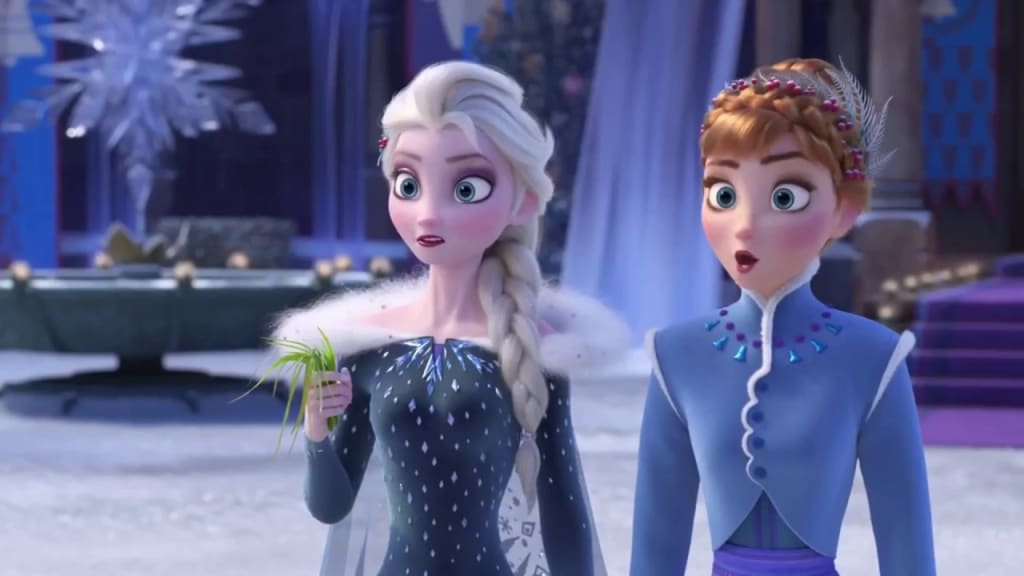
Frozen is a coming-of-age story quite unlike any other Disney animation movie because of its white feminist essence. Much like all other works (Wonder Woman, Captain Marvel), white feminist actors and filmmakers come at us with their technical proficiency and prowess and unleash their empowerment in the subtext of the white man’s template. But, you could choose not to see the essence and consume it as simply another Disney adventure.

In Frozen, an ingenue becomes aware of herself through her choice of partner, and a matronly sister afraid of her own superpowers comes into her own by letting it go. The villain is male, and the strongest male character is in a supporting role, but they get more to do than most movie supporting characters. And there is a reindeer, a snowman, and mountain trolls with magical wisdom and quirky wit. Wondering whether people with marginalized racial-ethnic backgrounds are identified as these “magical creatures” lands us in a murky zone; but gender-wise, they are an amazing way of identifying the marginalized in Disney movies.

Frozen 2 picks up on this essence and rolls with it, changing and evolving into a hopeful narrative for the future. It is once again a white feminist narrative, but quite overtly so. Disney was likely pushed by the fear of Jennifer Lee (co-writer, co-director), Idina Menzel (lead singer and star), and Kristen Bell (pioneer of the teenage feminist narrative in Hollywood) leaving the project if they gave up this feminist essence. The villain is male and much more sinister, and the previously ‘leading’ male character comes to accept and assume a supporting role. What gives us hope is the white guilt of the Disney princess urging her to see the past and usher us into a better future.

We know the past, or know of the past. A bunch of power-hungry, white men tried to take over the world and failed, leaving in their wake a summary desecration of the very essence of being human. We don’t necessarily see this past. That is because we inherited much of the comfort we live in through this privilege. In Frozen 2, Queen Elsa listens to herself and takes an odyssey into her past to see where her privilege comes from. And like us, she knew of it, and she probably knew it was evil, but chose to live on, facing her day-to-day obstacles. Now, she chooses to do the difficult thing, and sees the past and relives a betrayal so colossal by the evil white man, that nature retreated into itself. Nature shook the earth and darkened her city to urge her to see. And she inherited her power to rule from this and she falls into herself unable to, in all her physical power, find an antidote to move on. But the ally Anna comes into her own, pushing herself into every quest, calling Elsa out on her individual/existential adventure (it is the history of all white people). Anna moves forward, her male allies finding it in themselves to embrace the supporting role, and sees it through to the end. This act of great courage and empowerment makes Elsa come back, and she saves the day (for everyone, this time).

In Frozen 3, if all goes according to overt white feminism here, Queen Anna, now ruling the nation, will need to take down all her grandfather’s statues and change the honorary titles and places named for him. With this act, a majority of her people will turn against her. Why won’t they? Elsa has the great privilege of following her voice. But even among us who are similarly privileged, we have to work for a living and cannot leave our cats unfed to take on a grand odyssey to reshape our identity. Anna will also face the dilemma of whether her claim to power is legitimate and if she chooses to democratize now, the majority who want the grandfather’s name reinstated will win.

Will she trust her people to change? How will she persuade them thus? Her sister has become a nature warrior, and on foreign shores, the authority of evil, white men is continuing to lead the world on a destructive path. Will she take the fight to them (Greta Thunberg, essentially)? How will their paths cross? More importantly, will we see them empower someone less privileged, and take them to the top?

I simply cannot wait for Frozen 3.

Star Wars: The Force Awakens: Emergence of men as the second sex

*Major spoilers ahead* to Star Wars: The Force Awakens
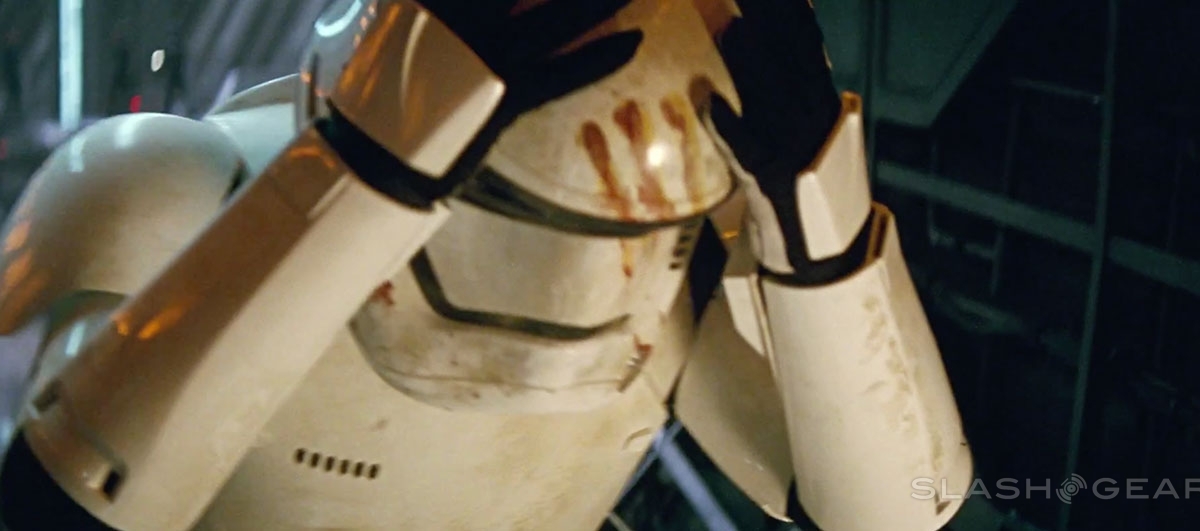
Luke Skywalker, Han Solo and Finn abandon their imposed responsibilities as men and flee. They are not protectors of “their” women anymore. They find it difficult to protect themselves and are often stranded and beleaguered. The movie starts with Finn wanting to flee the coup, unable to take the slaughter of innocents. Clearly insufficiently armed for a fight against the regime, Finn chooses to run. He also turns to a childlike charade of heroism when he is posed with the challenge of protecting his woman the first time. This is how he is represented, and it is a sign of things to come. The traditionally feminine characteristics of unyielding, stoic behaviour under imposed morally contradicting choices has been assigned to men. Finn chooses to flee again later, leaving behind his woman, as he finds his role in protecting himself more essential than protecting any other.
The women settle into the role of protectors, guardians and authority figures with ease. There are no real dilemmas as to where their loyalties are, but the men seem confused, and because of the childlike representation, attention seeking. This goes with the traditionally female argument that “all men are children”. The onus is still on men, but it is one of ridicule. Han Solo is represented as an older Finn, pursuing crazy endeavours, often self-sabotaging. Luke Skywalker is simply absent, for whatever higher purpose or for want of courage in facing the consequences of his actions. Rey, Maz and Leia build their fortresses and fight for all who will take their help. The enormous pressure of fighting against fellow men and the weight of being identified with the same gender as the oppressors seem to deeply unsettle every man.
The men in Star Wars: A Force Awakens are taking responsibilities for men previously represented in movies, not as individual characters. These are the sins of their forefathers and contemporaries who are represented as chauvinistic, heroic or anti-heroic because they are men. Their representation is not merely an apologetic caricature,  but a sign of gender oppression turning on itself. Either men are represented as reckless in their guilt-ridden escapes, or as simply evil oppressors. There is no action that seems redemptive for men; the women emerge as leaders with poise. The transition of men as the second sex with roles supporting women in their fight against tyranny and evil is strained, but it does happen.
While the men are abandoning their posts at the first sign of existential crisis, women are not over compensating, or even compensating. This is a role women have played for centuries. They are battle-hardened and self-assured about their ideas and skills. Their only doubts are regarding which course of action to take. Whereas the men are frozen in the face of action; undermined by their history of oppressive behaviour, doubtful of their stained identity as men genderally. They are pushed into possibly thinking that the only course of action is fleeing because they want to protect the women from themselves. This is just the beginning. The women are motherly, nourishing, supportive of this freezing and fleeing. This is natural for women, to accommodate for the men and fight the war.
Luke Skywalker is offered the lightsaber at the end of the movie. Will he overcome his existential crisis and second “his” women in the fight? The force has awakened,  we will find out how it transforms and endures.

Associated Links:
https://en.wikipedia.org/wiki/Star_Wars:_The_Force_Awakens
https://www.youtube.com/watch?v=bytDctZ2g6o

Image link:
http://cdn.slashgear.com/wp-content/uploads/2015/04/starwarstheforceawakens_teaser_trailer2_12.jpg

Contribution by: H. Prasanna