What matters in reality TV’s finest hour: Suchitra, the interviewer, and Karthik Kumar

By H. Prasanna 

“Hell hath no fury…” said William Shakespeare, who some believe was a woman. “There are no greater misogynists than women and gay men” goes the trope. Was William Shakespeare a gay man or a woman, or did they use a man to make it as a playwright, does it matter? None of this matters. Was he starting a trope for centuries when he said that? Yes, that matters. The reality TV gold in every Suchitra interview is that she never tells us why it matters. And she similarly jumps from one seemingly unhinged theory to another. This time, in an interview with Kumudam, she has captured lightning in a bottle much like her contemporary Vanitha Vijaykumar, who did it during the pandemic.

The conflation of “real” stakes and “reality” stakes is so engaging that I wanted to jump up and scream at my mobile screen. From Shakila’s proxy motherhood of a girl she has never met to YouTube Moms guilting their children, how fascinating her trains of thought that leave the station never to come back.

Does it matter that the interviewers don’t let women speak?

In an interview almost exclusively chronicling the misdeeds of men, the coveted “worst male” award goes to Suchitra’s interviewer. He interrupts her with his moralizing so much, that we would not have this gold if not for Suchitra’s sheer force of will breathing him down. The interview gets away from him very quickly. He cannot keep her on track and he cannot keep her off track.

Bill Burr, in a recent podcast with Bill Maher, said “You are someone with a fantasy football team who believes he is a GM.” He was responding to Bill Maher saying “he was the only brave one” for standing up to students protesting in American universities. Interviewers more often than not seem to believe that they and the audience have some personal stake in the interviewee’s life. This man is no exception.

Does it matter that we (the royal “we”) men are held accountable for our actions?

The problem for us reality TV audience is (to borrow from “Blue Sattai” Maaran) the villains are weak. Much of the content created by men are between blasé and banal. Bailvan Ranganathan (BR), a “reporter” who called her a nymphomaniac, is simply attacking her by calling her “a criminal psychopath” and Karthik Kumar is asking for “positive vibes” on Instagram.

The fact that Suchitra gave an interview and not a one-man show like BR and Karthik Kumar matters. It shows what women are really up against when holding men accountable. We need a male interviewer there to legitimize that what she is talking about is not just a “woman’s issue”. And the fact that he interrupts her constantly makes us realize she needs to be heard.

The most interesting thing about Karthik Kumar’s rebuttal was what he didn’t say. Suchitra piles on a million reasons about how he is human garbage. Maybe he is not. But, he doesn’t care about those things. He only talks about sexuality. Not his sexuality, sexuality in general. Does it matter if Karthik Kumar is a closeted gay man? It doesn’t. But it does matter if he was in a marriage with a straight woman!

A screenshot of the movie poster for the movie Kaathal - Teh Core

He does not need to address that. But then he didn’t need to address anything, and with these fake reality TV stakes he could have really made this blossom. With him being a comedian who writes his own material for a living, I really expected more. But, he just vaguely rambles on about sexuality: “all types of sexuality are normal.” “Gay people have to say pride to be accepted as normies.” “Be proud to be all types of sexual.” Thanks for nothing, Karthik Kumar.

The responsibility and work of emotional competence in the light of abuse is not on the victim, if he is the victim. But, is it ever typical that a man conducts himself with emotional competence when accused of something by a woman? He refuses to contextualize himself or present his case in any coherent manner. He simply asks for support, which is he is getting, mostly from women. At its worst, it is a reality TV dud, a banal passive aggressive jab against a mountain of viral content.

Does it matter how we are held accountable?

It does matter how we are held accountable, and it should not descend into abuse. The fact that Suchitra gets a platform and her open disdain shows us she is privileged and empowered. She doesn’t mince words, she minces those she accuses. She calls them names. She soulfully manifests that they get no IPL tickets (equals a slow painful death in cricket fandom).

But, Suchitra’s brand of rage is extremely familiar to men. It is the reason women talk to husbands when they are driving or at the dining table. Because men run away and women are not heard and things remain the same. It is the quiet simmering ember that lives on the surface fuelled by the our (man’s) refusal to learn emotional competence and address the real issue, learn thought leadership and take point at least sometimes, and learn to be kind when we are right. Watching this interview is like plunging into the ashes of those embers.

Suchitra says she lost her career because of something that men did. I don’t know what is going to happen to BR or Karthik Kumar or the others, but I can guess. They never need to take any responsibility or change. They will be supported through this ordeal, probably by the law as well. It will not end their careers, quite the opposite, at least for Karthik Kumar, who had previously positioned himself as a woke comic. This is not a glitch in the system, this is the system. I think I am pretty safe in assuming Suchitra knows this, and every other woman too. So, you have already lost your career and no one will be held accountable. If it is not “right,” how she speaks at least makes sense to me. But does it matter?

ReplyForwardAdd reaction

Kaathuvaakula Oru Villain

A poster of the movei Kaathuvakula rendu kaadhal with Vijay Sethupathi, Nayantara and Samantha

I watched Kaathuvaakula rendu kaadhal this summer, and my first thought was — how daring is this filmmaker, how courageous — he made a straightforward film about a villain and his life. 

KRK opens like most well-designed anti-hero stories, with a clean origin story for its male lead. We find out what makes this character feel so entitled, why he believes he can construct realities in which he receives anything he’d like. Vignesh Sivan constructs a neat argument for us to empathise with this anti-hero — at one point, I began to wonder if this is a film with no male protagonist. And this conventional thought is what failed me: the protagonist is the villain.

In Super Deluxe, Vijay Sethupathi made you hate yourself for liking the performance of a cisman who played a transwoman, for appropriating the life experience of a trans person and participating in denying opportunity to a trans person to play a marginalised character. In Naanum Rowdy Dhaan, he enraged you as he gaslit the female lead and denied her the truth about her father’s death and disallowed her grief so that he could enjoy a few extra  hours of watching her in her hollow shell. In KRK, VS exceeds all expectations as a man, who openly, with no regard for performative wokeness, simply objectifies women and repeatedly, endearingly, honestly, politely, loudly tells them that their consent means nothing. 

KRK is an important film for Tamil cinema, for its actors, for the times we live in. It reinforces the message that feminist thought has no place in mainstream entertainment and art; the audience loves a good villain; good production values mean nothing in the age of digital releases. 

And of course, it delivers its primary message — a woman’s consent means nothing in the face of a man who believes he deserves everything he’d like. 

They should just call it ‘Phantom Dread’

*Spoilers for the American film Phantom Thread from 2017*

In Phantom Thread, a raging misogynist buckles under the claustrophobia of the oppressive system meant to protect him. Like all men in power, he’d rather lose control over his life than give up his power; he’d rather suffer punishment than treat others equally than choose to bring down the hegemony that made him deserving of punishment.

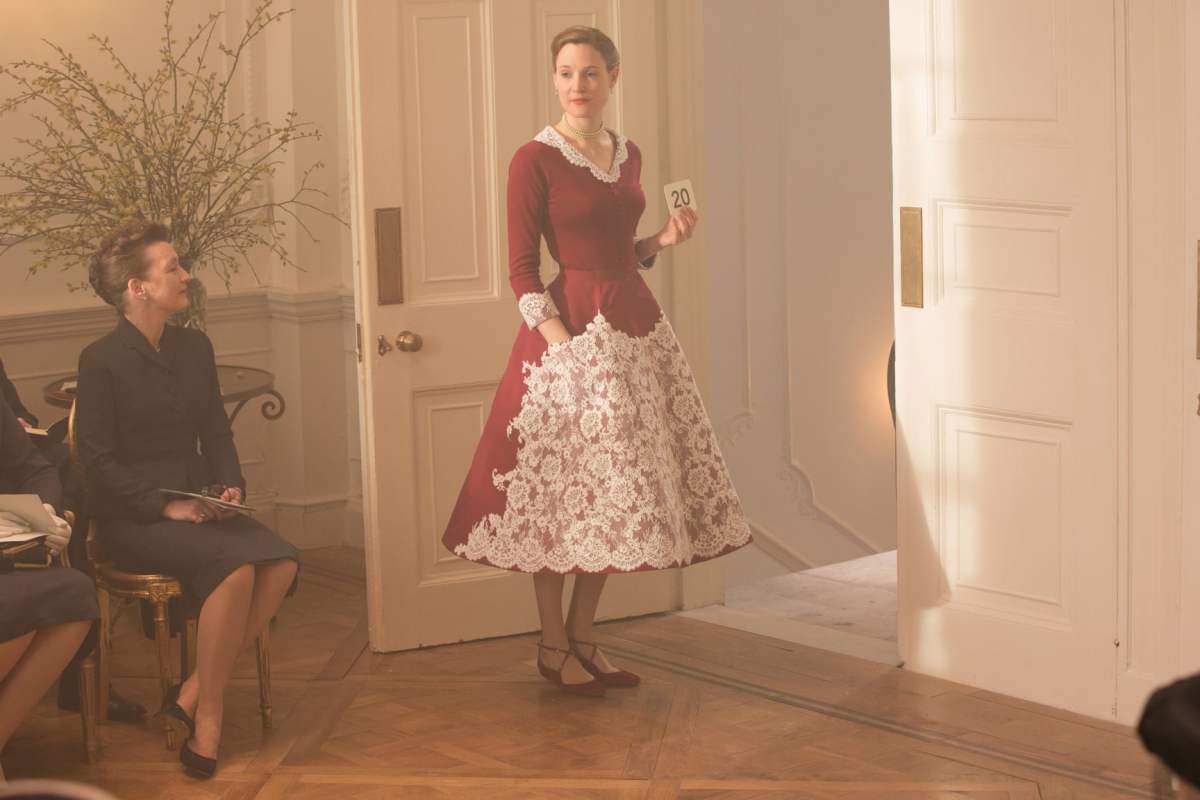
The world of Reynolds Woodcock, a 19th-century master dressmaker, runs on the productivity and professionalism of women. The workers use a back entrance, are on time and deliver superior quality work every time. Reynolds’ sister Cyril serves as a manager/show runner of this factory/house. Reynolds is portrayed as the talent; he designs great dresses. And as we have seen with portrayals of great men, he needs a specific set of circumstances to unfold like clockwork around him to achieve this “genius.” He is cold, arrogant, and ignorant of the feelings of those around him.

While on a trip to the country, Reynolds falls for the first sprightly, soulful woman (Alma) he meets. With Alma reciprocating his feelings with intense curiosity and the hope of youth, they quickly become lovers. His routine is winded, but Alma’s youthful cheer and unflinching loyalty to his work make her irresistible to him. Eventually, they fall apart, but she is not done with him. She draws him out, and she reins him in. Completely given over, he is happy again, around the arms of a woman who knows to control him, but permits him to live in his hegemonic structure. She even fantasizes of him as a changed man with whom she has a happy future; but for now, she will settle for controlling him using his need for punishment.

Thanks to the attention to detail in the film’s plot and making,  Phantom Thread turns into a sublime inversion of the classic drama of the male hero’s will and his unattainable conquest. It is a cynical and satirical work overall, but it falls prey to conventional male-film making in the saddest of ways– throughout its narration, the film has a backdoor of sympathy to its misogynistic male protagonist.

Sympathetic portrayals of men show us more than they intend to. When done as exquisitely as this, they showcase the structure of the world around them that enables their menace. 

The women who work for Reynolds respect and treat him with undeserved kindness. He has abused this kindness for long, failing to make friends with them, despite their kindness. When he first meets Alma, he intrusive and oppressive; she flinches, but is more bemused than bothered by it.  He warms up to her quickly, telling her all his vulnerabilities on their first date. His face is filled with the joy of a younger man falling in love, or a weary, lonely man unbeknownst an ally. 

Alma and Cyril belong to different classes. Reynolds benefits of it, so unquestioningly enables it. Alma seamlessly forms allies with the workers at the house of Woodcock. Cyril jolts every time she realizes the increasing control Alma has over Reynolds. I cannot tell if Cyril is a caricature or not. She is, as many other reviews call her, Mrs Danvers-esque. Is this a male filmmakers nod to Hitchcock? Is it a misogynist’s need to show that women also cause problems for women?

The quest for liberation is supposed to act as a great leveler. One class of women cannot be liberated while others are not. And this vicious cycle is starkly exposed in Phantom Thread. We watch as Reynolds follows Cyril’s word with all his relationships in society. We learn that she enables his ignorance as long they can use his hegemony to maintain their status quo. We ignore the parts that show liberated women of the upper class using the hegemony of men to assert their superiority over the women of lower classes. We accept that women with class privilege are forever at the behest of men.

As such, Reynolds does not understand much of anything, let alone the intersectional nature of liberation. He gets confused and agitated over the contradicting claims of Alma and Cyril over him. All he knows is that only these women can protect him. And so, he follows them. 

Phantom Thread is yet another (unnecessary?) tale of the crippling effect oppression has on the oppressor. It attempts to tell us about how men hold on to misogyny, living with the trepidation of a swift and unforgiving reckoning. As things stand in the film, it is  slow and demanding. Is one worse than the other? I am not sure it matters.

What a girl wants…the Bollywood edition

by Aishwarya Subramanian

Ah Bollywood. For decades now, it has entertained us, made us fall in love and created unrealistic expectations about the power of moonlight. The very fabric of Indian culture is now intertwined with Bollywood for better or for worse. And Bollywood most definitely has also confused millions of men (and women) for decades about love.

In a land where most of the directors, scriptwriters and producers are men with very few women in the playground (do Farah Khan movies really count?), Bollywood, has staunchly positioned itself as the sole voice for women in India. Except for those of us who have claims to being actual women on this planet, the Bollywood version of true love, feels a little off. Here’s why:

Boy eve teases girl after spotting her in a bus. Girl ignores him and sits with her friends

What Bollywood says: She is clearly very interested in you. She is completely affected by your masculinity. That’s why she is ignoring you.

What girl thinks: I like my friends. I shall sit with them and talk about Ryan Gosling’s baby news.

Boy stands behind girl. He calls out to girl. Girl turns around and looks at the boy. Then she walks away looking slightly puzzled.

Bollywood says: She LOVES you! She turned around dude. Obviously she would never ever turn around if she didn’t want to fall into your arms and marry you and have babies with you. You are set boss.

What girl thinks: Did someone yell at me? Who is this dude staring at me like that? Why is he grinning at me? Do I have something in my teeth? This is weird and creepy.

Boy now follows girl everywhere she goes. Girl tells the boy to back off. Boy smiles indulgently licking his lips.

Bollywood says: Girl is playing hard to get. She wants you to try harder. Follow her to her house. Stalk her parents now. You should also listen in on her calls. She is your future wife and she knows it.

What girl thinks: I should call the police right? What if this guy attacks me? I think it’s time to order pepper spray from that online store. I can get it on discount.

Boy grabs the girl and plants a kiss on her. Girl slaps him. Boy grins licking his lips.

Bollywood says: Nope! She didn’t mean to slap you. She liked being kissed. Now, she will sit by her balcony and dream about you and sing songs while basking in the moonlight. Oh and her voice will sound like Alka Yagnik or Shreya Ghoshal. And the song will be a poetic masterpiece. Something Javed Akhtar will write.

What girl thinks: I have been assaulted.

Boy yells at the girl for not responding to his advances. Girl looks stunned.

Bollywood says: Girl needs to be tamed. So, yell at her. Tell her off for being an independent woman. Slap her if you must. She has “over attitude”.

What girl thinks: This qualifies as persistent sexual harrassment right? Why did I leave my pepper spray in the other bag? I need to get away and call the police.

Boy- Girl have a nice conversation. Girl laughs at boy’s jokes. Girl tells boy that he is a good friend

Bollywood says: Nonsense. Men and women can never be friends. She loves you. If she doesn’t, then she clearly used you by being friendly with you. How dare she think of you only as a friend? If she spent time with you, then she needs to marry you and fuck you too.

What girl thinks: Ah. It is so refreshing to have a nice chat with a friend.

Girl holds a drink at a party. The boy tells her that drinking alcohol is wrong for women while holding a glass of clear whiskey. Girl stares.

Bollywood says: Damn straight! By drinking alcohol women invite the satan into their souls. Men can drink alcohol because they are cool (unless it’s the villain who drinks the alcohol….which means the next scene would be a rape scene because Bollywood is very original like that)

What girl thinks: Um…dude I just want my fricking drink. Can you return it already?

Boy asks girl about her dreams and goals in her career. Girl says she wants to work after she leaves college.

Bollywood says: The girl’s real dreams is to marry you. She doesn’t want a “high flying” career. She only wants to sit at home, raise your kids and do pooja with your mom. This is what she wants.

What girl thinks: Wait. I went to school for fourteen years. And then I went to a prestigious college. I studied hard. Graduated. And now I genuinely want to work. That really is my dream. Why do you think I secretly want to sit at home when I have already specifically told you otherwise?

Boy and girl eat icecream. Boy asks girl if she wants to have kids. Girl says that having kids is not really a priority for her in life. In fact, she doesn’t think she will ever want kids. She doesn’t like children.

Bollywood says: Ha! Bollywood would never have a heroine ever say something like that. Are you sure you are watching a Bollywood film? Is this girl a heroine or a secret villain out to strike the real heroine when she gets a chance?

What girl thinks: I don’t think I want to have kids. If you aren’t fine with that then we both need to find partners who want what we want and support us in our decisions. Also, are you sure this ever happened in a Bollywood film ever?

Girl breaks up with boy. Says she is going to marry someone else.

Bollywood says: She will never ever want to break up with someone like you. You followed her and stalked her and kissed her against her will. Obviously you love her the most. Now, go crash her wedding, pick her up and carry her away from her own marriage. Come on dude…trust us. We know women.
What girl thinks: I have been kidnapped. Dammit I left my pepper spray in the other bag again!

And finally….

Boy asks a girl out. She says no.

Bollywood says: She is being cute. With a woman, a no does not really mean no

What girl thinks: A no is a no. A capital N and a capital O.

 Aishhwariya Subramanian (that’s her legal name and it’s a long story), hates patriarchy and spends far too much time on the internet looking up Panda videos. She loves pop culture and cares about your views on unicorns. When she isn’t running away from all of life’s problems, she writes about issues through a feminist perspective. You can catch her fawning about Arsenal and Taylor Swift on her Twitter account: hyper_aice. 


Mard ka Sar: Getting Man Head

When I watched Kuch Kuch Hota Hai as a young, impressionable cis-female tween, I learned several things:

1. Girls can love boys and have their hearts broken.

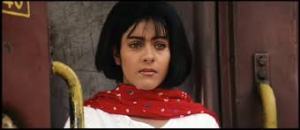
Kajol sad

2. Girls can love boys and not have their hearts broken.

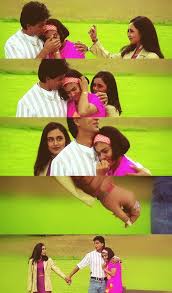
Rani Happy

3. The right man will love you when you finally stuff yourself with femininity and other gender attributes.

As with Anjali:


And with Tina:

4. Thoughtlessly leaving people at the altar is the best way to show how in love you are.

5. Even if you are 100% doucheface man, if you get a woman to love you, you will be 100% fine and societally accepted. Karmic romantic redemption is not a necessity for men.


Doucheface Man


6. College is basically wearing colourful clothes and hanging out everywhere, watching 2-3 people live their lives.

(No picture necessary)

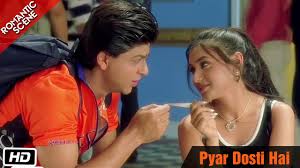
7. “Pyaar dosti hai”: Love is friendship

Pyaar Dosti Hai

8. “Ek mard ka sir sirf teen auraton ke saamne jhukta hai. Ek apni ma ke saamne, ek durga ma ke saamne aur…”: A man bows his head only in front of three women – in front of his own mother, in front of Goddess Durga


But also:

Kuch Kuch Hota Hai, tum nahin samjhoge. 


Pictures with text from: http://perilsofbeing.tumblr.com/post/19027506016/bollywood-recap-kuch-kuch-hota-hai

Moving on from Gendered Entitlement?

I remember plonking down on the sofa one day to watch T.V., only to switch it off in disgust because the first movie I saw was titled ‘Manalane mangayin baagyam” (A husband is a woman’s blessing). Later, I came to know that the movie was about a princess who fights for the life of her husband against an ichaadari nagin (clichéd, I know but isn’t that the basic premise of most Indian movies?); but at what cost? A princess who is forced to leave the comforts of her palace and live in a thatched hut because she now “belongs” to her husband. I understand that the whole concept of marriage being “pious” and “saath janmon ka rishta” (a bond of seven lives) was well embedded in the society back then, but this is taking it a bit too far.

Literature was never short of strong feminist roles, and many such gems have been converted into masterpieces in this era, such as ‘Kannagi’  but, at the same time, movies that are considered to be classics do portray woman, who would be called strong willed and self sufficient today – as head strong and arrogant.

Then, we have the 80s and 90s where the predominant theme was ‘the sister’ who had to be avenged, because either she was raped or murdered. This theme has been repeatedly used, and I must agree, rather creatively, in super hits like ‘Panakaran’ (Tamil), ‘Sakalakala Vallavan’ (Tamil), the famous ‘Garv: Pride and Honour’ (Hindi), and even Bollywood cult-classic ‘Gunda’. This was also the time, where the portrayal of woman as the property of men was rampant. “tu meri hai”( you’re mine) is a common term you can find in many songs. One such example is the ever famous song from Darr that goes along the lines of “tu haan kar, ya naa kar, tu hai meri Kiran” (you may say yes or no, but you’re still mine, Kiran). I agree, these were the pangs of a psychopath; but throw in anything with a catchy tune and the song is a guaranteed hit.

Another recurring theme in this era can be seen in movies like ‘Taal’,  where a girl pines for her ‘loved one’ even after he has dropped her like a hot potato, and in the end gets married to him and such movies are deemed to be classics. One movie that took it too far was ‘Pukar’, the premise of which was, if you thwart a girl’s advances, she wouldn’t mind endangering the safety of an entire nation. Whoa, where did you come up with that? Kudos to you!

On to movies that are of relevance today, you have amazing movies with a strong willed woman playing a pivotal role such as, ‘Mozhi’, ‘36 Viyathinile’, ‘Neerja’ and ‘Mary Kom’ to name a few. But at these same times, there are movies such as ‘Ki and Kaa’, which mastered the art of portraying feminism incorrectly, and in bad light. But, even today, there is any Salman Khan movie, where the job of the heroine to dress up like a doll, and play the quintessential damsel in distress, who “Bhai” saves.

During an era in which we are exploring severely undiscussed themes like homosexuality, there are brilliant films like ‘Aligarh’ and ‘Margarita with a straw’ or even an average family entertainer like ‘Kapoor and Sons’, that dealt with the topic with so much ease, we definitely have come a long way from where we started, but we still have a long way to go.

By Harimohana Narayanan

With inputs from Varun Tandon, a fellow movie buff.


What are women singing about themselves anyway?

by Iswariya

Context: A couple of weeks ago, Genderally Cinema ran this piece: https://genderallycinema.com/2016/03/09/six-tamil-heroine-introduction-songs-actually-about-the-heroine/ about Tamil movie songs that introduce female protagonists, and actually describe them and their feelings, vs being used as prop to further a cis-male focused story. One of our readers wrote in this excellent piece, she questions if women in Tamil cinema are really singing about themselves the way men do. 

I completely agree with your commentary on the positioning of women in cinema: “Often, they are characterized to sing about men, or about having to experience love or romance, and are often used as a prop for the male protagonist in the film”. I hardly get to see heroines playing roles of significance or roles that break the female stereotype in existence today.

However, to be honest, I am not very sure if the list of songs that have been put together here portray or cherish womanhood. In some sense it also falls prey to the stereotype of how lyricists pen down women in their poetry. Whilst songs such as ‘En Peru Padaiyappa’, ‘Naan adicha thaangamaate’ ‘My name is Billa’, and ‘Maari’ describe the power and strength of men and depict them as the superheroes with no force standing a chance against them, women are always characterized to see themselves as as a happy-go-lucky blissful girl who seems to care only about her day to day living or her unison with nature.

Jyothika in ‘Kushi’ is all about stopping the rain at her will; yes, she does compare herself to the wind with no wings (a.k.a limits) but in the movie, right after this song she is seen forced into marriage. “Konjum Mainaakale” from Kandukonden is an all-time favorite melody, sadly again the song talks only about the woman’s association with nature; where all Aishwarya Rai wants is to celebrate Diwali and to see through that her roses bloom right after she plants them. I am not saying that it is wrong as a premise, but all the song is conveying to me is women are soft, innocent, gullible day-dreamers who live in a world of fantasy where men can walk right into us and our lives.

With cinema creating a huge impact on people’s lives today, it is sad to see songs such as, ‘Adidaa Avala Othadaa Avala Vidra Avala Thevayae Illa’ and not the ones like ‘Uyire Uyire Vanthu Ennodu Kalanthuvidu’ capturing the audiences.

One cannot just blame the Indian entertainment industry, songs from the Western world also describe women as lost in love or waiting for love. But at least, there, I can name a few songs that promote female empowerment where women are shown as strong and independent beings, who have their own accomplishments. Just on top of my head: “Independent Women” from Destiny’s Child, “Confident” by Demi Lovato, “Warrior” by Kesha, “Roar” by Katy Perry, “Run the world (Girls)” by Beyoncé, “Girl on fire” by Alicia Keys and of course not to forget Pink!
I would like to sign-off with one last question with reference to a famous quote: “Behind every successful man there is a woman” , but where is your success story Girl?


Iswariya is a researcher; Chennaiite at heart, German by profession. Chocoholic and shopoholic.

Star Wars: The Force Awakens: Emergence of men as the second sex

*Major spoilers ahead* to Star Wars: The Force Awakens
Luke Skywalker, Han Solo and Finn abandon their imposed responsibilities as men and flee. They are not protectors of “their” women anymore. They find it difficult to protect themselves and are often stranded and beleaguered. The movie starts with Finn wanting to flee the coup, unable to take the slaughter of innocents. Clearly insufficiently armed for a fight against the regime, Finn chooses to run. He also turns to a childlike charade of heroism when he is posed with the challenge of protecting his woman the first time. This is how he is represented, and it is a sign of things to come. The traditionally feminine characteristics of unyielding, stoic behaviour under imposed morally contradicting choices has been assigned to men. Finn chooses to flee again later, leaving behind his woman, as he finds his role in protecting himself more essential than protecting any other.
The women settle into the role of protectors, guardians and authority figures with ease. There are no real dilemmas as to where their loyalties are, but the men seem confused, and because of the childlike representation, attention seeking. This goes with the traditionally female argument that “all men are children”. The onus is still on men, but it is one of ridicule. Han Solo is represented as an older Finn, pursuing crazy endeavours, often self-sabotaging. Luke Skywalker is simply absent, for whatever higher purpose or for want of courage in facing the consequences of his actions. Rey, Maz and Leia build their fortresses and fight for all who will take their help. The enormous pressure of fighting against fellow men and the weight of being identified with the same gender as the oppressors seem to deeply unsettle every man.
The men in Star Wars: A Force Awakens are taking responsibilities for men previously represented in movies, not as individual characters. These are the sins of their forefathers and contemporaries who are represented as chauvinistic, heroic or anti-heroic because they are men. Their representation is not merely an apologetic caricature,  but a sign of gender oppression turning on itself. Either men are represented as reckless in their guilt-ridden escapes, or as simply evil oppressors. There is no action that seems redemptive for men; the women emerge as leaders with poise. The transition of men as the second sex with roles supporting women in their fight against tyranny and evil is strained, but it does happen.
While the men are abandoning their posts at the first sign of existential crisis, women are not over compensating, or even compensating. This is a role women have played for centuries. They are battle-hardened and self-assured about their ideas and skills. Their only doubts are regarding which course of action to take. Whereas the men are frozen in the face of action; undermined by their history of oppressive behaviour, doubtful of their stained identity as men genderally. They are pushed into possibly thinking that the only course of action is fleeing because they want to protect the women from themselves. This is just the beginning. The women are motherly, nourishing, supportive of this freezing and fleeing. This is natural for women, to accommodate for the men and fight the war.
Luke Skywalker is offered the lightsaber at the end of the movie. Will he overcome his existential crisis and second “his” women in the fight? The force has awakened,  we will find out how it transforms and endures.

Associated Links:
https://en.wikipedia.org/wiki/Star_Wars:_The_Force_Awakens
https://www.youtube.com/watch?v=bytDctZ2g6o

Image link:
http://cdn.slashgear.com/wp-content/uploads/2015/04/starwarstheforceawakens_teaser_trailer2_12.jpg

Contribution by: H. Prasanna